
When installed by an accredited team of professionals, a new driveway is designed to withstand harsh conditions, and last for many years to come.
But, having said that, even the best driveways age over time – especially after a decade of being exposed to British weather.
The appearance and performance of driveways are most commonly affected by freeze-thaw cycles, heavy rainfall, and ground movement, plus vehicle movements and oil stains. Over time, these can all make gradual impacts on the driveway.
It’s important to note, however, that not all driveway materials age at the same rate. In fact, while some driveways can age very slightly over 10 years with just basic maintenance, others can start to show visible wear within just a few years.
In this article, GV Paving’s team of driveway experts have shared a detailed breakdown of how the most commonly used driveway materials age and perform over 10 years.
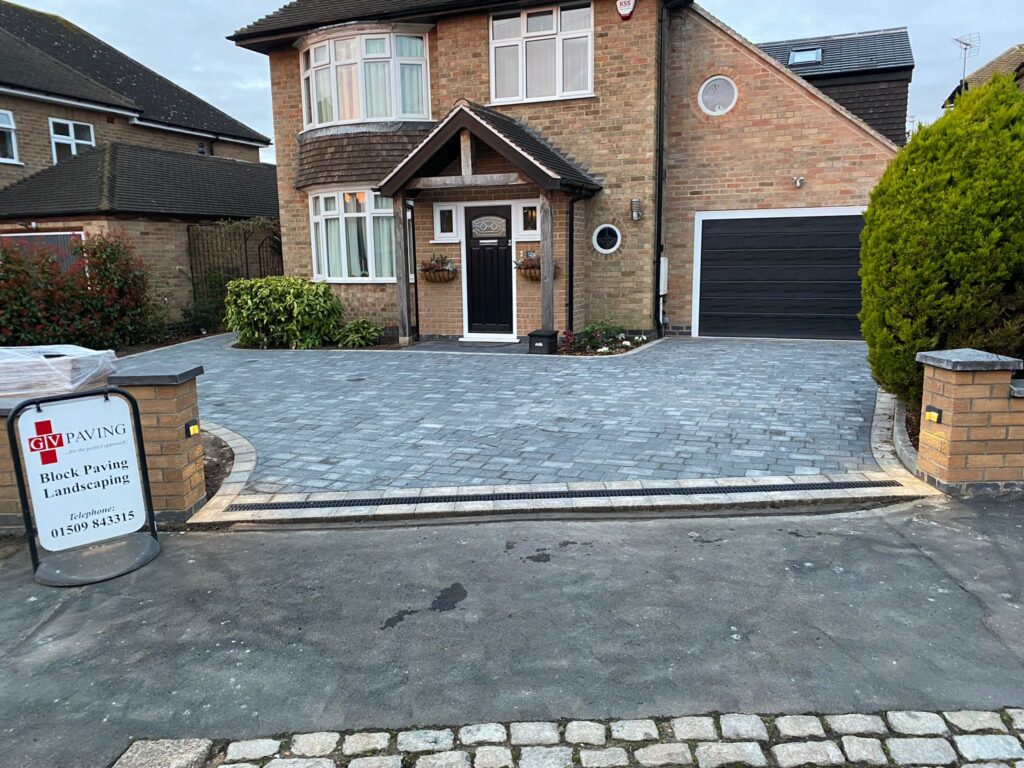
Block paving – 10 year predictions
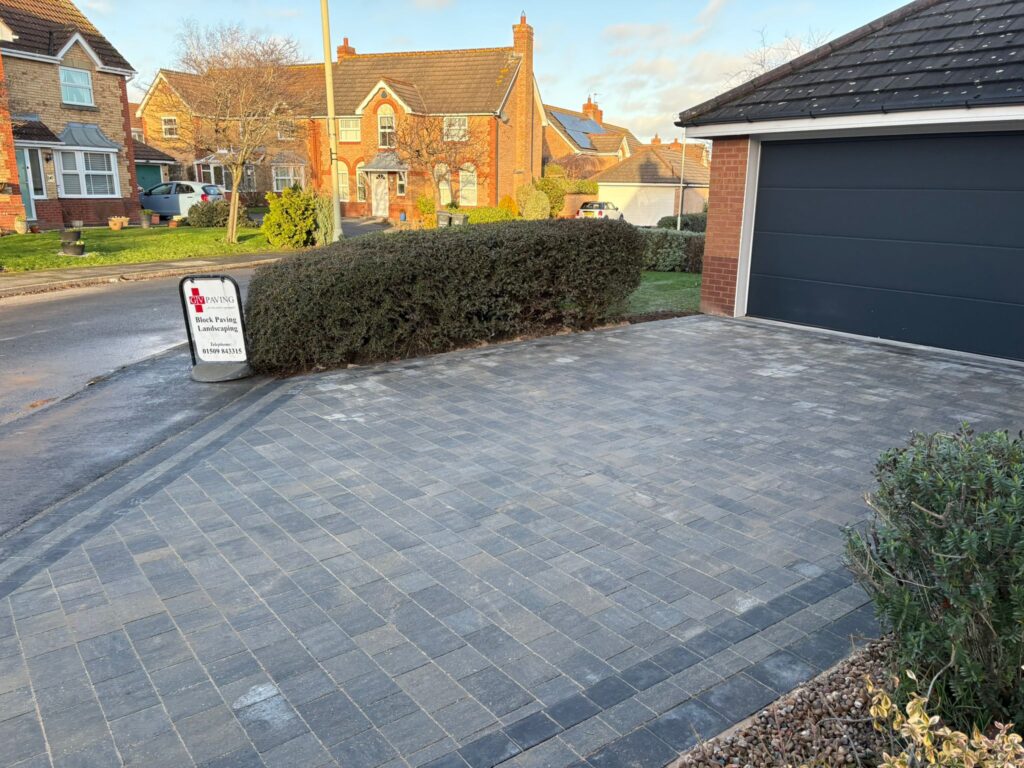
Years 1-3:
- Block paving looks at its best, with rich colours and tight joints.
- The surface is stable, with some risk of minor settling (as the sub-base beds in).
- If jointing sand is not properly maintained, occasional weed growth may occur in the joints.
Years 5-7:
- Maintenance requirements increase.
- The jointing sand can start to wash out.
- Moss and weeds can start to establish (without proper maintenance).
- Slight movement or sinking can occur (particularly in areas where vehicle use is heavier).
- Colour fading is common, particularly if the driveway has darker tones, which are directly exposed to sunlight and weather conditions.
Year 10:
- Block paving is visibly aged.
- Common appearance issues include uneven levels, oil stains and tyre marks.
- Repair works are common, and these may also be visible (if these were required). This includes patch repairs, re-sanded joints or even the full lifting and relaying of sections.
- Weed treatment will likely have been required.
Porcelain driveways – 10 year predictions
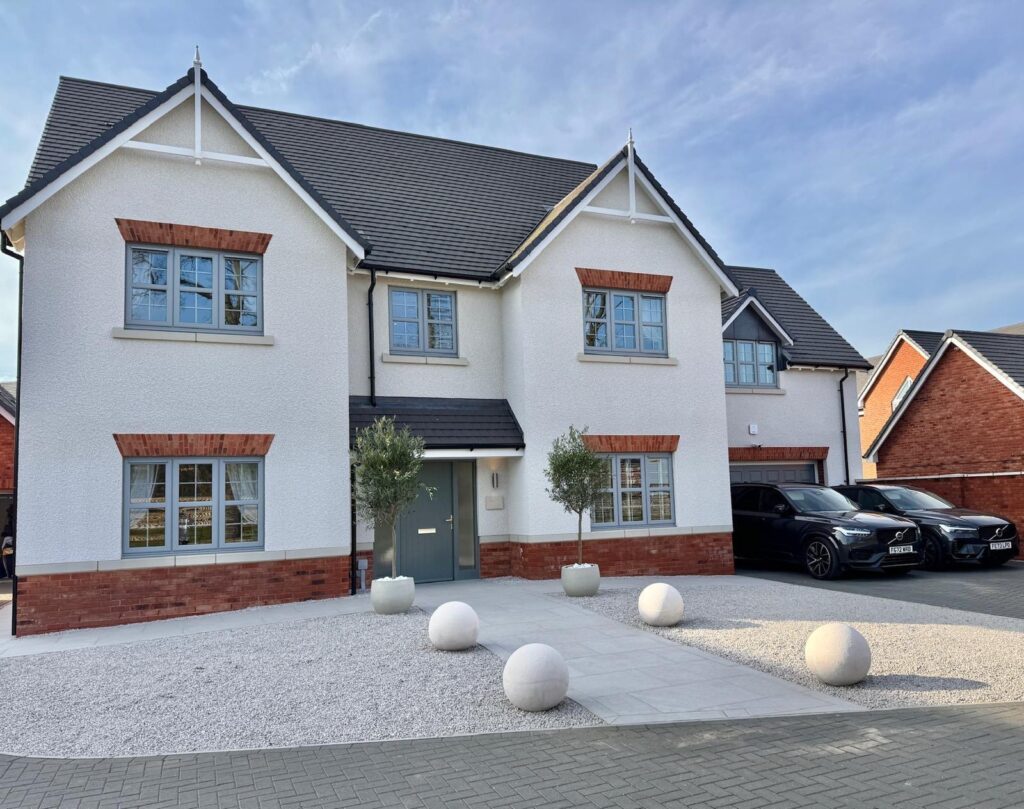
Years 1-3:
- In these early years, porcelain driveways perform very well.
- Colours appear consistent.
- The driveway’s surface has high resistance to staining and fading.
- Thanks to porcelain’s low porosity, it is easy to clean, and experiences minimal algae growth.
Years 5-7:
- Usually, at this stage porcelain will continue to retain its appearance to a high standard.
- Surface cleaning requirements remain low-minimal.
- At this point, the quality of the installation will become key.
- If the sub-base is of a low quality, then you can start to see the movement or cracking of grout lines (or edge restraints).
Year 10:
- By year 10, the quality of the installation will play a pivotal role.
- If installed to a high standard, porcelain will still look neat and colourful, and very close to its initial condition.
- Note that, with porcelain driveways, issues are more commonly structural (over cosmetic).
- Common issues that you may start to see are subsidence at edges or failed joint materials.
- If repairs are required, these are usually localised.
- Maintenance costs and requirements remain low, with just occasional cleaning and joint checks needed.
Natural stone driveways – 10 year predictions
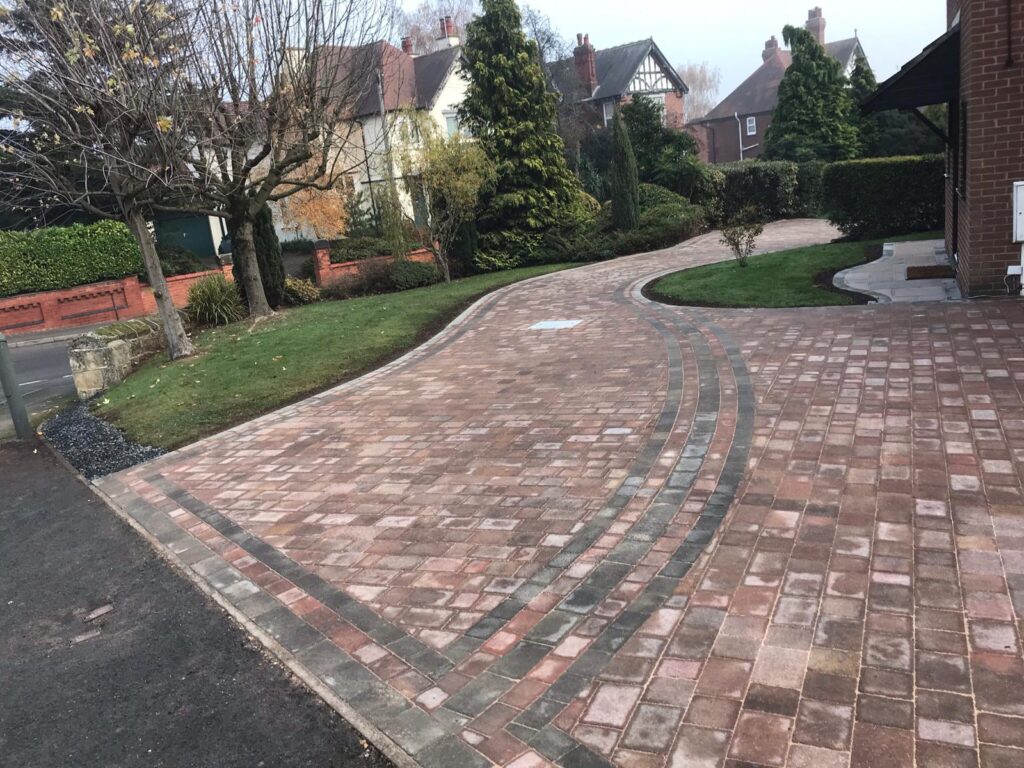
Years 1-3:
- For the first few years, natural stone has an appealing aesthetic, but natural weathering can already start, leading to some subtle variations in tone.
- Differing natural colourations or patina can start to occur, based on the degree of exposure.
Years 5-7:
- Weathering (and the consequent colour variations) become more pronounced.
- Moss and algae growth can start to occur, particularly in shaded or damp areas.
- Other common aesthetic risks include surface erosion and slight edge chipping.
Year 10:
- By the 10 year mark, a natural stone driveway often has a visibly aged appearance.
- At this point, it’s likely that the driveway will be clearly weathered.
- For some homeowners, this natural appearance may be a plus point. But for others, they may feel frustrated, and see it as looking worn.
- Maintenance requirements can be moderate-high. Common requirements include re-pointing and routine deep cleaning.
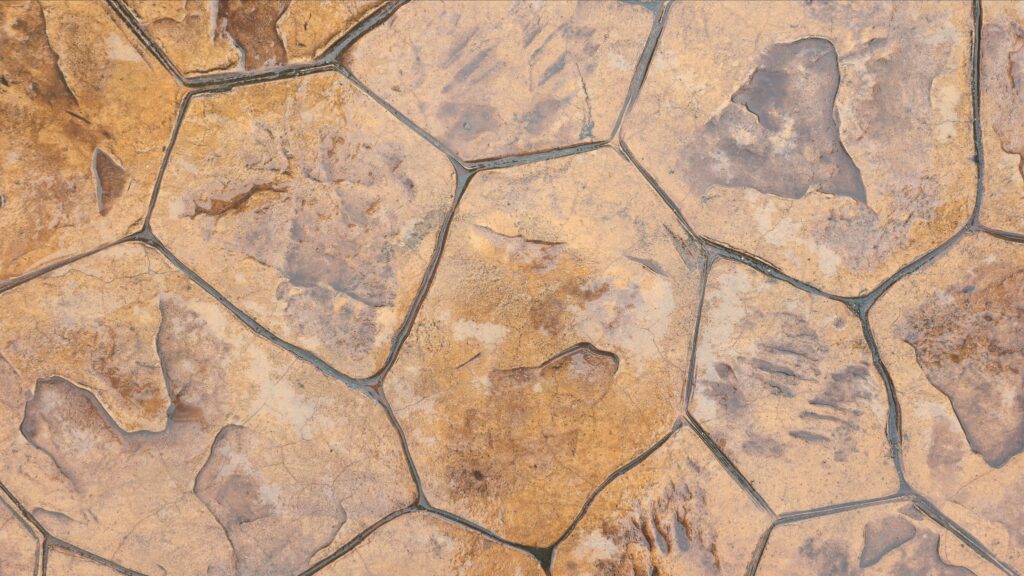
Imprinted concrete – 10 year predictions
Years 1-3:
- For the first few years, imprinted concrete has a consistent aesthetic and uniform colour.
- Imprinted concrete also has a reliably sealed surface and low maintenance requirements.
- This material has a high resistance to common issues like weeds and movement.
Years 5-7:
- At this point, some issues can start to appear.
- The surface sealer may start to degrade, which can create colour fading or patches.
- Fine cracks in the surface may also start to develop (due to thermal expansion and ground movement).
- By this point in the driveway’s lifespan, resealing is a commonly required maintenance task.
Year 10:
- By year 10, many imprinted concrete driveways will have at least some visible cracks.
- Colour loss or widespread fading is common.
- There are also likely to be visible signs of surface wear.
- To rectify these issues, resurfacing or a full replacement are usually considered by the 10th year.
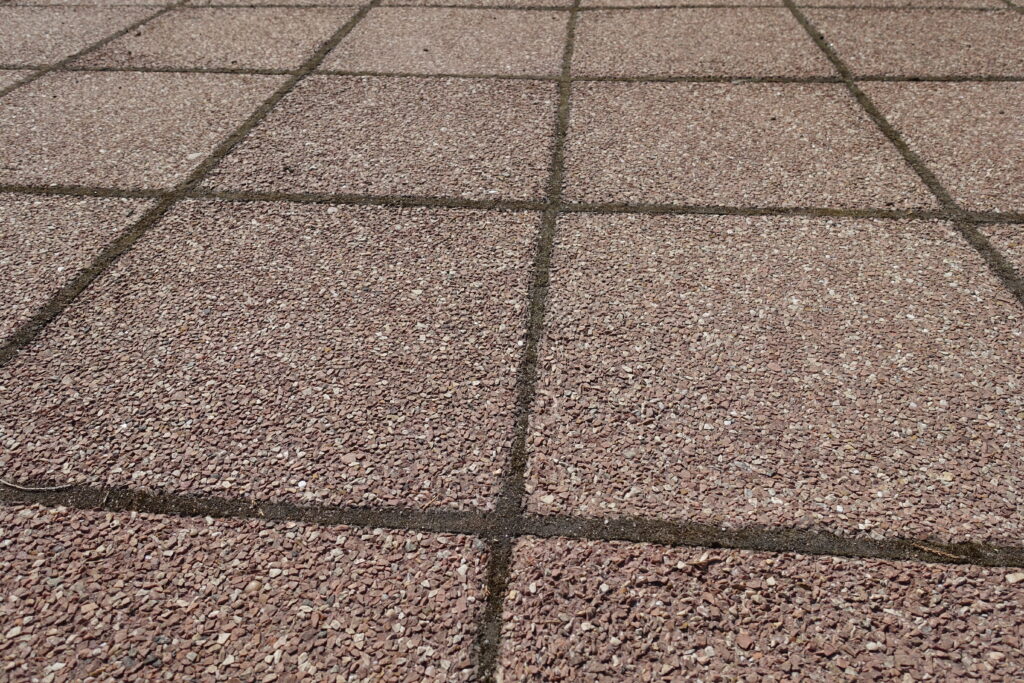
Resin-bound driveways – 10 year predictions
Years 1-3:
- For the first few years, resin-bound driveways boast a great standard of performance.
- These driveways have a smooth, permeable and even surface.
- The material has excellent drainage.
- At this stage, weed growth is minimal.
Years 5-7:
- After a few more years, some minor UV fading can occur (depending on a combination of factors, including the quality of the resin and the type of aggregate).
- Slight surface wear may have occurred (especially in high-traffic areas).
- Generally though, structural integrity will remain strong.
Year 10:
- After 10 years, the driveway may start to appear duller.
- In high-traffic areas, there may be some aggregate loss (but this is usually only minor).
- Some small, local repair work may have been necessary.
- Even by 10 years, maintenance costs generally remain low, and usually only occasional pressure washing and spot repairs are needed.
How can UK weather affect driveway ageing?
UK weather conditions can have a significant impact on driveways and their pace of ageing.
The most common weather-related issues that driveways face include:
- Freeze-thaw cycles – This is when water enters small cracks, freezes and expands. This then widens the gaps. Porous materials (e.g. block paving joints and natural stone) are particularly affected by this.
- Heavy rainfall – Leads to the gradual erosion of key parts of the driveway, particularly jointing sand (in block paving). Can also lead to the increased rate of algae growth (particularly in shaded areas).
- Ground shifting – Clay soils are common throughout the UK. As moisture levels change, these soils can move, resulting in slight ground shifting. This can especially affect inflexible systems, such as block paving and imprinted concrete.
Understanding the 10 year total cost of ownership
When it comes to assessing long-term value, the upfront costs of materials and installation are just one part of the picture.
Over the course of 10 years – and beyond – you’ll also need to consider the costs of maintenance, repairs, re-work and, for some materials, resurfacing.
Maintenance costs and requirements can also vary considerably between materials. For example, while some materials require only occasional cleaning and maintenance, some materials will need re-sanding, weed control, relaying, re-pointing, re-sealing and more.
At GV Paving, we are professional paving contractors, trusted by clients across the UK to help them make informed decisions about the right paving type for them.
To find out more about different paving materials, or to get our expert guidance for your specific requirements, don’t hesitate to get in touch.