
Laying new turf is one of the most effective ways to breathe new life into a garden.
If you’re ready to refresh your old turf, or bring some greenery to a landscaped area, then the first – and arguably, the most important – step is preparing the groundwork.
In fact, completing the groundwork carefully and correctly is just as important as choosing high quality turf.
Without proper preparation, your new turf won’t thrive. But, by completing the tasks we’ve outlined below, you can establish the best possible conditions for your new lawn, and give it the best chance of establishing strong, healthy roots.
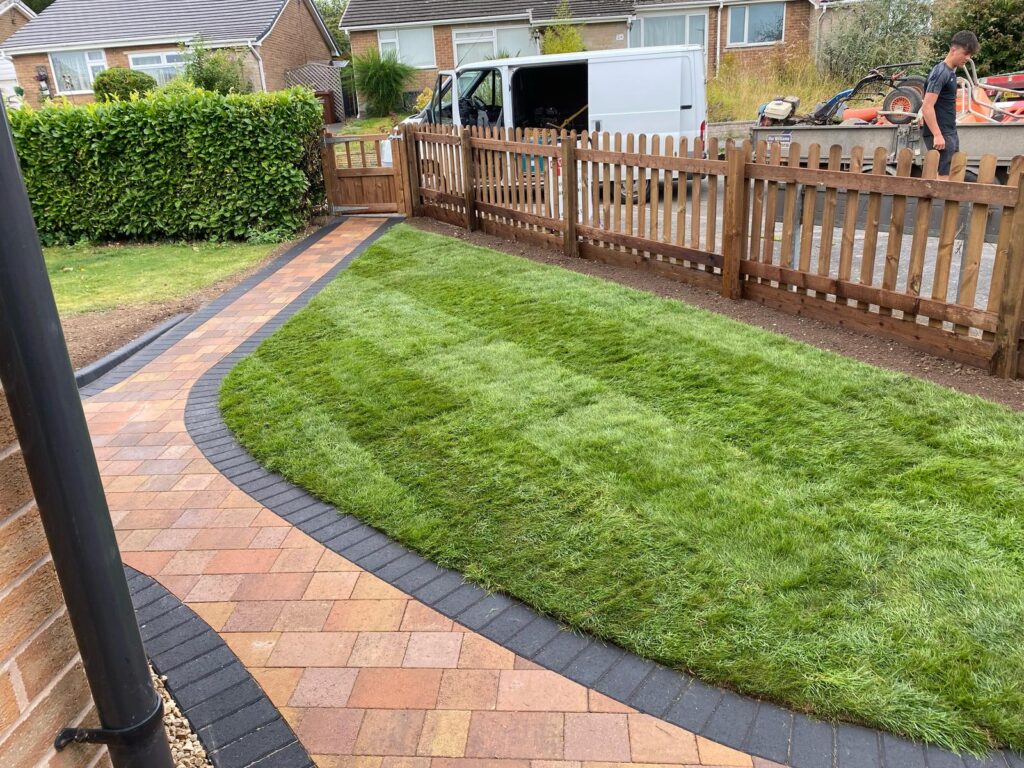
1. Clear the area
First, clear the area where you’re laying the turf.
This includes removing any existing weeds, old turf, stones, roots and other debris.
If you’re replacing existing turf with new turf, you’ll need to remove the old turf (rather than just laying new turf over the top). Not only does this make it easier to create a neat, even surface, but it also maximises the new turf’s access to the soil and key nutrients.
2. Prepare the soil
Then, once the area is clear, you’ll need to break up the compacted down. You can do this by lightly digging through the soil, or using a rotavator tool. This will help the new lawn’s roots to properly establish.
As you’re doing this, check the condition of your soil. This is a key factor in determining how well your new lawn develops.
If the soil is sandy, lacks organic matter or generally of a poor quality, you should work to improve this by adding compost and/or organic material. This will help improve the structure, moisture and nutrients of the soil, and is far more effective than simply adding a layer of new soil over the top.
3. Level and firm the ground
Next, you’ll need to level the soil and establish a firm, even surface.
First, rake the soil in order to remove stones and break down any larger soil clumps. Keep raking in multiple different directions, to ensure all areas are covered and even.
Then, you can walk over the surface to firm it up (without making it excessively hard).
When should you lay new turf?
Timing is key, especially in the UK – given our rather unpredictable climate!
Turf is best laid in mid-autumn through to early spring. At this point in time, the ground isn’t too wet or frosty.
Then, once your turf arrives, it should ideally be laid within a day or so of delivery. Avoid leaving it sitting around, as the lawn can quickly start to deteriorate, if left.
Prioritise lawn aftercare
Then, once your lawn is laid, you should ensure a proper aftercare routine is in place – Especially for the first few weeks. This is the period when the lawn establishes itself, so it’s key that you keep it as healthy as possible during this time.
Our best practice tips for new lawn aftercare are:
- Water thoroughly in the first few weeks
- Ensure you stay off the new lawn while it establishes its roots – Avoid walking or placing any heavy items on it for the first two weeks ideally.
- Don’t mow the lawn until it’s established – Wait for at least 2 weeks.
At GV Paving, we offer specialist landscaping and turf laying services, delivered by our highly trained, fully qualified team of specialists.
We’re trusted by homeowners and businesses across the UK to keep their outdoor spaces looking immaculate. This includes landscaping, turf laying, and even driveway and patio installation services for those planning a full garden refresh.
So, if you’re preparing for a garden refresh, the GV Paving team are on hand to help.